Wenatchee native Steve Brown creates AI tool to help cancer patients
When Wenatchee native Steve Brown received a rare blood cancer diagnosis in early 2025, the Silicon Valley entrepreneur was surprised that his physicians had been unable to detect the cancer.
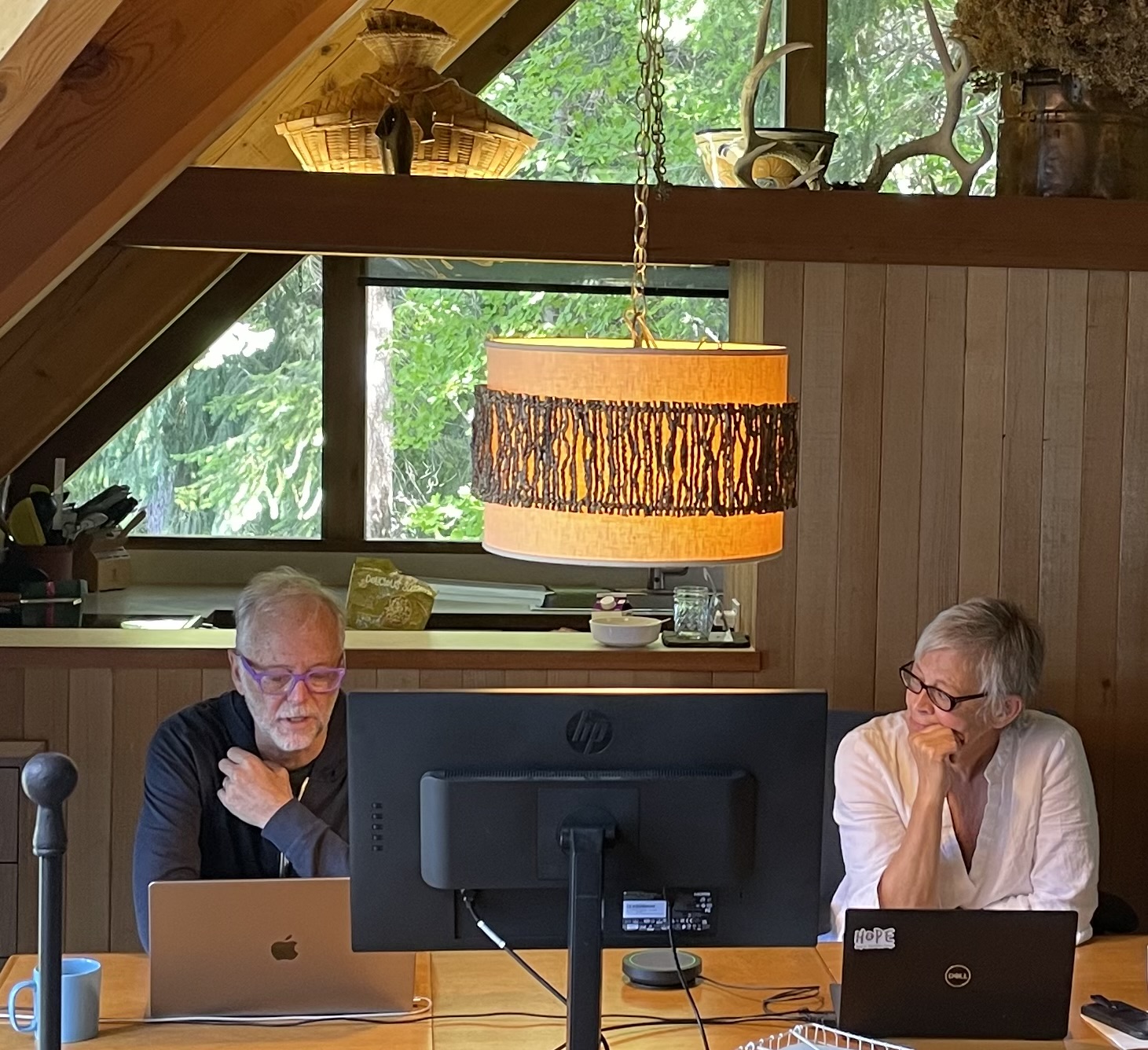
After his diagnosis, Brown decided to load his medical files and related information into an AI app and, voila! The technology successfully flagged warning signs that his original doctors had missed. “I was stunned that AI could immediately see what had been missed,” Brown said. “If it could find that, could it also help me find treatments matched to my cancer’s biology? That’s when I saw its potential to help patients become true partners with their doctors,” he added.
The technology also proved to be useful in helping educate Brown about his specific cancer and research potential experimental therapies that Brown might qualify for. He says the insights he gained helped him become a more effective advocate with his oncology team and become a partner in his healing journey.
A friend from Wenatchee, Lisa Booth, had been battling breast cancer for over a decade and when she heard about Brown’s AI tool, she asked if she could use it for her own cancer journey. She became the second patient to use these tools and a true believer in the power of Curewise.com.
Their collaboration led Brown to start Curewise.com, a company devoted to assisting other cancer patients to become better advocates. He partnered with fellow Wenatchee native Lisa Booth, who has been battling breast cancer for over a decade in further developing the technology.
Curewise.com does not replace the need for physicians. Instead, it allows patients to more effectively collaborate with their physicians. They’re making the technology available for a subscription fee to patients who want to use it to navigate their own cancer journeys.
Brown and Booth are children of prominent Wenatchee physicians. Steve’s father, Dr. Jim Brown, was a gastroenterologist who served as chairman and CEO of Wenatchee Valley Clinic from 1996-2001, and Lisa’s father, Dr. Fred Bockenstedt, was a radiologist and medical director at WVMC.
Brown graduated from Wenatchee High School in 1983 and went on to Stanford University. Booth graduated from WHS in 1986.
Brown had experience working with medical technology during his time in Silicon Valley. One of his startups was a company doing chronic care management and remote patient monitoring. Thanks to his connections with Confluence Health through his father, Brown was able to develop a partnership with the medical organization to test the technology.
Brown received his cancer diagnosis just a few short weeks after losing his home to a wildfire. At the time, he recalled thinking that losing his possessions was the worst thing that had happened to him. But a diagnosis of having a rare cancer changed all that and he quickly started focusing back on medicine.
He took the work he was doing in AI, pointed it at his medical records, and asked it to help him figure out what was happening in his body. This process led him to get a second opinion from experts at the Mayo Clinic and other major medical centers.
For most patients, when a cancer diagnosis happens, there is a “standard of care” that dictates how that cancer should be treated. He started being treated that way until his research suggested that with his unique medical history, the standard protocol wouldn’t be effective.
That information gave him a reason to have serious conversations with his medical team. “So I learned from my own case that rolling up your sleeves, getting educated and asking the right questions can lead to a materially different outcome,” Brown told me. He found a treatment that has been effective for him and he is in remission. The AI tool identified a mutation in his medical chart that rendered the standard protocol ineffective.
Brown had a different experience. After graduating from the University of Washington, she went into international consulting. One project she worked on was installing a warehouse management system for PetSmart.
One day, she discovered a lump in her breast and in short order she was diagnosed with stage four cancer. She did her best to educate herself using Google, which she refers to as Doctor Death, and found little that was helpful.
When she heard about Brown’s AI app, she was intrigued and asked to use his tools. She’s been using Curewise.com to research promising drug trials. She’s on a drug that is working at the moment but she keeps a close eye on Curewise.com in case she other changes need to be made. “Curewise has the ability to enable patients to not feel like victims,” Booth said.
“Because you’re never going to have all the information, you’re never going to make a perfect decision,” Booth said. “But I want people to know that they canb improve their chances by actively participating (in their treatment journey),” she added.
It takes patients some time to get the hang of using the AI tool. A patient can ask the tool to make suggestions about questions the person should ask their care team, for example. They’ve loaded the AI application with hints and tips to help cancer patients who don’t have much background in technology to start investigating their cancer and treatment options.
The promise of AI to help improve lives is something that technology folks have been touting. We can see in the development of Curewise.com an example of how this promise can be fulfilled.
And the fact that a couple of Wenatchee natives are making a difference is pretty awesome.
If you are a cancer patient, you can sign up for a free trial at curewise.com, according to Booth and Brown.