From Judgment to Compassion: The Life Journey of Jim Caulkins
Jim Caulkins learned the value of hard work growing up in rural Montana and Alaska. Raised in what he describes as a “survival-type situation,” he planted potatoes, cared for chickens, hunted, fished and cleared land.
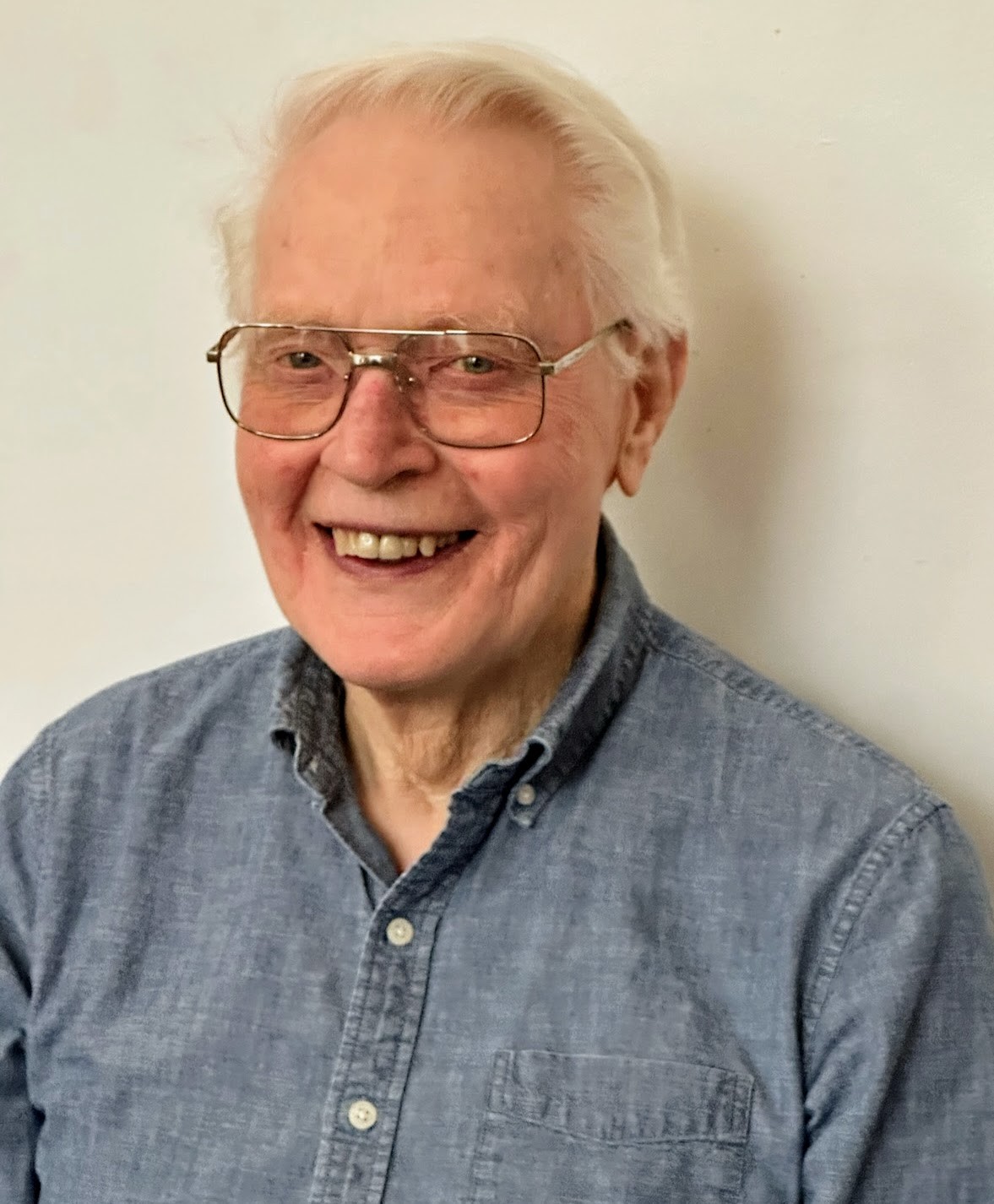
Those early years taught him self-reliance and the importance of taking action. Yet over the course of a long life, the physical exertion and rugged independence that defined his youth gradually gave way to a deeper fascination with the inner workings of the human mind and spirit.
That journey led him from the ministry to mental health counseling, hospital chaplaincy and hospice work. Along the way, he worked to free himself from harsh judgments of both himself and others, choosing instead a path rooted in listening, compassion and understanding.
“I started out being afraid of the judgment of others,” Caulkins reflected. Today, at age 92, he has largely let go of those concerns.
“As I look back, the thing that was central was not so much talking or sharing verbally, but doing,” he said.
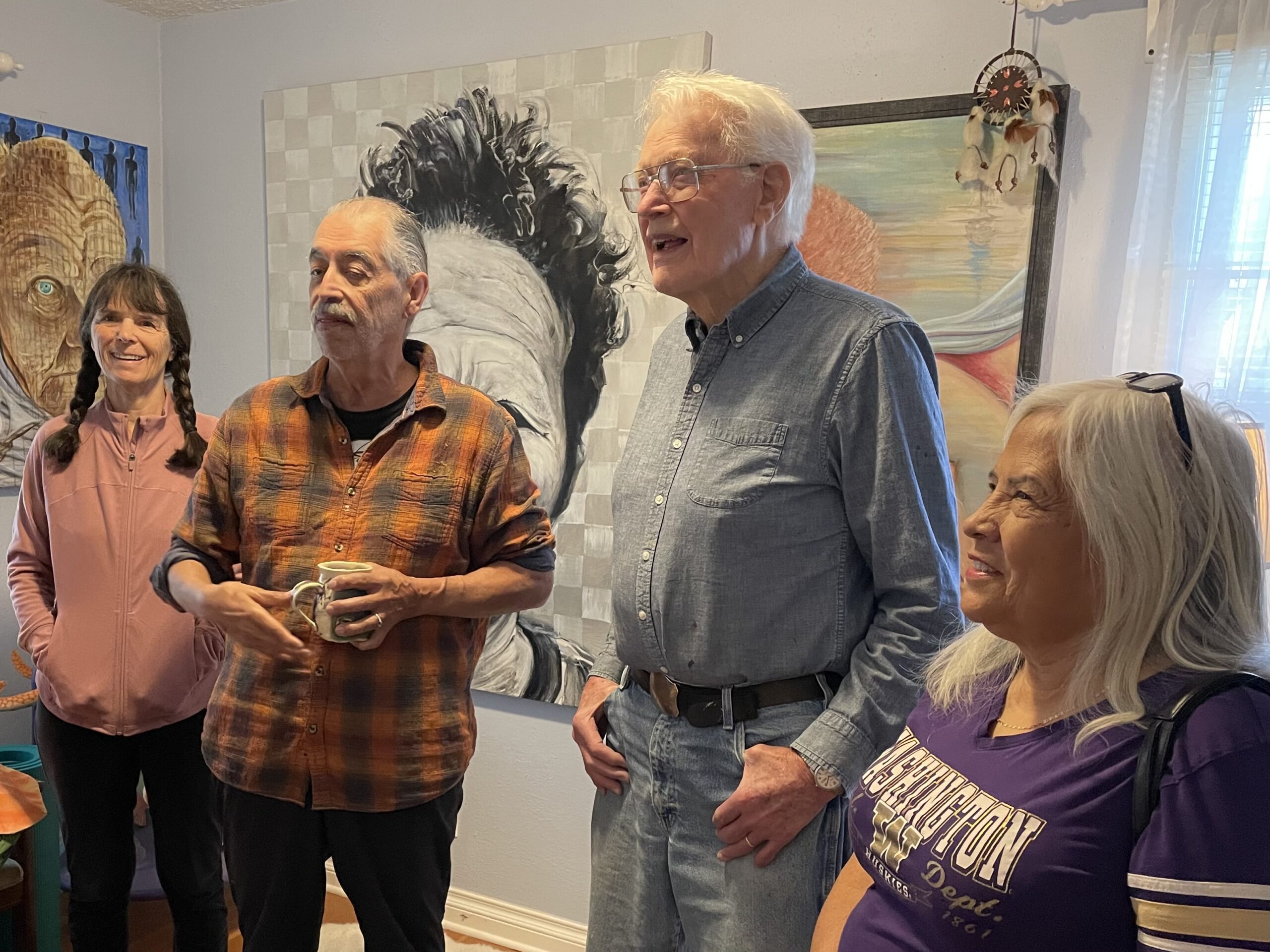
Caulkins is one of four participants in the Ripple Foundation’s Elder Speak program, alongside Alma Chacon, Terry Valdez and Tina Rieman. The group will share lessons and insights from their lives this fall in both Leavenworth and Wenatchee. The program brings together elders with rich life experiences and creates space for them to reflect on the wisdom they have gained over decades of living.
Born in 1934 in Roy, Montana, Caulkins moved with his family to Palmer, Alaska, when he was two years old. One of the most influential people in his early life was his pastor, Rev. Alfsen, who also served as a Boy Scout leader and Sunday school teacher. Inspired by his example, Caulkins decided at a young age that he wanted to enter the ministry.
That calling eventually led him to Rocky Mountain College in Billings, Montana, where he met and married the love of his life, Charlotte. After graduating, he attended San Francisco Theological Seminary and accepted his first pastoral assignment in Moses Lake.
The position began a long association with Tall Timber Ranch at Lake Wenatchee, a Presbyterian camp that would remain an important part of his life for decades.
Following a pastorate in Okanogan, Caulkins took a leave of absence to pursue a master’s degree in psychology and counseling. He believed a deeper understanding of the human mind would help him better serve people struggling with relationships and personal challenges.
His professional path reflected an ongoing process of personal growth. As his understanding of human behavior deepened, his instinct for action was increasingly balanced by contemplation, empathy and presence.
“As a pastor, I tried to be a vehicle through which God’s presence could be felt,” he said.
Today, Caulkins is not sure whether the Presbyterian Church that ordained him would do so under current circumstances. But he doesn’t spend much time worrying about it.
Instead, he focuses on continuing the lifelong work of understanding himself and others. Charlotte and Jim shared 66 years of marriage before she died from Alzheimer’s disease five years ago. She passed away at 5:15 p.m. on Mother’s Day, a moment he remembers with remarkable clarity.
Looking back, Caulkins sees his life as a long developmental process. “I’ve been trying to understand what makes me who I am,” he said. “I do a lot of self-evaluation at this time in my life.”
Perhaps the most significant change has been in the way he views other people. Earlier in life, he admits he was more judgmental of the shortcomings and failures he observed in others. Experience, however, taught him something different.
“There aren’t any bad people, including myself,” he said.
One of his continuing goals is to let go of judgment and recognize the humanity in everyone, including those struggling with life’s most difficult challenges. When judgmental thoughts arise, he says he mentally places them in his own “museum” of old ways of thinking.
Letting go of judgment has allowed him to meet others with a more open heart and mind.
After years as a mental health counselor, Caulkins became a chaplain at Central Washington Hospital, offering support to patients and families facing serious medical crises. After retirement, he became a hospice volunteer, continuing his commitment to accompanying people through some of life’s most difficult moments.
Throughout his career—as pastor, therapist, chaplain and hospice volunteer—Caulkins has focused on being fully present with those in need. Rather than trying to provide answers, he has learned the value of simply listening.
“One of the advantages of being an introvert,” he said, “is that I don’t have to go and share myself with everybody. I can listen to whatever they have to say.”
Holding space for others is a sacred gift, and it is one that Caulkins has offered to countless people over the years. He listens to their hopes and fears and meets them with compassion rather than judgment.
Jim Caulkins is a peaceful soul whose life has been devoted to helping others navigate hardship, loss and uncertainty. His story reminds us that growth is a lifelong process and that wisdom often comes not from certainty, but from learning to listen—with curiosity, humility and an open heart.